
Pull up a cozy chair, wrap your hands around something warm, and settle in for a moment. If you’re here, chances are life has been feeling a little heavy lately —not in a dramatic, everything-is-falling-apart way, but in a quiet, lingering way.
The kind of heaviness that comes from too many tabs open in your mind, too many small decisions, too much noise that never fully turns off. You’re still functioning, still showing up, but something inside you feels cluttered, like there’s no real space to breathe.
The good news is that you don’t need a dramatic life overhaul to feel better. You don’t need to reinvent yourself, move somewhere new, or suddenly become a different version of you. What you might need instead is something much softer: a gentle reset. Think of it like pressing pause on the noise, not erasing your life. A slow, seven-day return to yourself through small, doable shifts that quietly create more calm, clarity, and ease.
Let’s take it one day at a time.
Pin it for later!
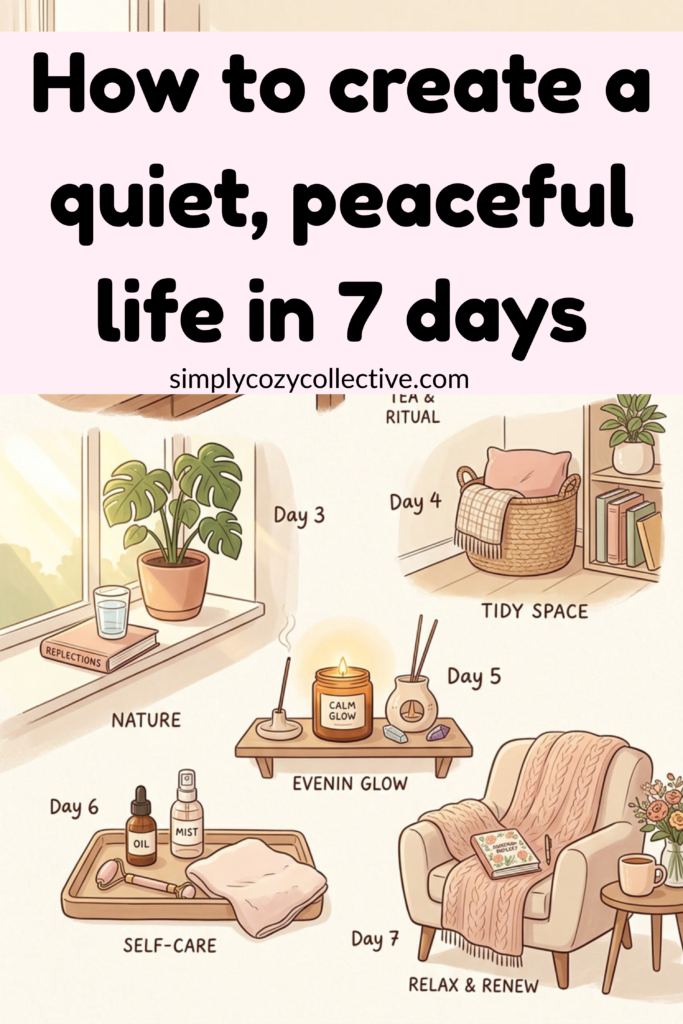
How to reset your life in 7 days
Day 1: Creating space from digital noise
We start with your phone because, for most of us, it’s the loudest thing in our lives without us even realizing it. It’s not just the screen time—it’s the constant switching, the notifications, the endless pull of “just checking.” Over time, it can leave your mind feeling scattered and overstimulated without a clear reason why.
Today is about gently taking back a little control. Instead of trying to change everything at once, simply remove three apps that consistently leave you feeling worse afterward. Not the ones you enjoy or use intentionally, just the ones that drain you or pull you into comparison and scrolling loops. This small step alone can shift how your phone feels in your hand.
Then, switch your screen to grayscale mode. This removes the bright, attention-grabbing colors that make apps feel so addictive. Suddenly, your phone becomes less emotionally stimulating, almost neutral. It still works—but it stops shouting for your attention every few seconds.
By the end of the day, you may notice small but meaningful changes: reaching for your phone less automatically, feeling a bit more present, or realizing there’s slightly more space in your mind than before.
If you feel like adding a bit of creativity to your slow moments, you might enjoy these cozy doodle sheets.
Day 2: Resetting one small corner of your space
Today is not about cleaning your entire home or organizing your entire life. That kind of pressure usually leads to burnout, not calm. Instead, we focus on one tiny area—just one—that has been quietly adding to your mental clutter.
Maybe it’s your nightstand that collects random objects. Maybe it’s a chair that has become a temporary storage system for clothes. Maybe it’s a corner of your desk you avoid looking at. The size doesn’t matter at all. What matters is choosing one small space and giving it your attention.
Clear everything off completely so you can actually see the surface again. Then be intentional about what goes back. Keep only what is useful or genuinely brings you comfort. Let go of three items you no longer need, and set aside one thing to donate. This isn’t about perfection—it’s about creating a small pocket of order in your environment.
When you finish, take a moment to sit with it. A clear surface might seem simple, but it can change how a room feels. It creates a subtle sense of ease, like your environment is finally exhaling with you.
Day 3: Gently reconnecting with your body through food
Today is about nourishment, not restriction. No rules, no diets, no “good” or “bad” choices—just small ways to reconnect with your body in a kinder way.
Start with something simple: a glass of water before your morning coffee. It sounds almost too small to matter, but it gently reminds your body that you’re taking care of it before the day begins. It’s a quiet act of support rather than rush.
Later, add one vegetable to your meals today. It can be something fresh or frozen, simple or cooked into something you already enjoy. The goal isn’t to change your eating habits overnight, but to slowly reintroduce balance in the easiest way possible.
And for one meal today, try something that might feel a little different at first: eat without screens. No scrolling, no background videos, no distractions. Just your food, your senses, and a few minutes of presence. You may notice flavors more deeply, eat more slowly, or simply feel more grounded in the moment.
Day 4: Moving your body without pressure
This day is about reconnecting with your body in a way that feels soft and supportive, not structured or demanding.
Find a quiet moment, put on something comfortable, and lie down on the floor. There’s something grounding about being close to the earth—it naturally encourages you to slow down. From there, move gently. Stretch your arms overhead, bring your knees toward your chest, twist from side to side. Follow what feels good rather than what “should” be done.
Stay with it for about ten minutes, noticing where your body feels tight or held. You don’t need to fix anything. Just breathe into those areas and allow them to soften a little. Your jaw, your shoulders, your lower back—these are often places that quietly carry stress.
Think of this as a reset for your nervous system rather than exercise. A moment to tell your body, “You’re safe. You can relax now.”
If you’d like something gentle to do during quiet moments, you might enjoy these cozy printable coloring pages!
Day 5: Protecting your emotional energy
This day invites a little honesty about your social world. Not in a harsh way, but in a clarifying one. The people and content we consume every day shape how we feel more than we realize.
Think about the interactions in your life. Who makes you feel lighter, calmer, more like yourself? And who leaves you feeling drained, small, or anxious afterward?
Send a simple message to someone you genuinely appreciate. It doesn’t need to be deep or long—just a small connection point that reminds you of warmth in your relationships.
Then take a quiet step for yourself: mute or unfollow a couple of social media accounts that consistently make you feel worse. This isn’t about cutting people off or creating distance in real life. It’s about curating what you allow into your mental space.
And finally, practice saying no once today. Something small, something optional, something you don’t truly want to do. Notice how the world continues just fine afterward. That realization alone can feel incredibly freeing.
Day 6: The power of one tiny action
Sometimes what keeps us stuck isn’t lack of motivation—it’s the buildup of small things we keep avoiding. These tasks are usually simple, but in our minds they grow bigger the longer we delay them.
Today, choose one task that would take less than five minutes. Just one. Not a list, not a productivity overhaul—just a single action.
It could be replying to a message, putting away an item, or washing one dish. The key is to do it first thing in the morning, before you have time to think your way out of it.
What you’re really doing here is breaking the cycle of avoidance. And once it’s done, you carry a quiet sense of “I already handled something today,” which often creates a surprising amount of emotional ease for the rest of the day.
Day 7: Defining your new feeling
Instead of ending the week with big goals or complicated plans, we keep it simple and emotional.
Take a piece of paper and finish this sentence:
“This week, I want to feel more…”
Let whatever comes up be enough. There’s no right answer. You might write calm, focused, rested, creative, or even something like slow or quiet. The word itself doesn’t matter as much as how it feels to choose it.
Then, underneath that, write one tiny habit that could support that feeling. Something small enough that you could actually imagine doing it on a normal day. If your word is “calm,” maybe your habit is sitting quietly for three minutes before checking your phone in the morning. If your word is “creative,” maybe it’s allowing yourself a few minutes to doodle or write without purpose.
If you like having gentle structure to support these small daily habits, you might love these simple printable planners I’ve created for you.
Final cozy thought
By the end of these seven days, nothing about your life will be dramatically different on the surface—and that’s actually the point. You’re not trying to become someone new. You’re simply clearing enough space to hear yourself again.
Maybe your phone feels a little quieter, your space feels lighter, and your days move with a softer rhythm. And slowly, you might start to feel a little more like yourself again.
Because a reset isn’t about transformation. It’s more about returning slowly, softly, and without pressure to yourself.
And whenever you’re ready, you can begin with Day 1—right where you are.